4000 Hunger stricken School Children enrich their meals through Farming
The project supports school children in six schools with farming skills to produce their own nutritious food for mid-day meals to improve on nutrition and school attendance. Schools were supported with improved planting materials and agricultural skills to grow vegetables, cereals and tubers within designed school compounds and gardens.
Agricultural trainings
Learners in the beneficiary schools were engaged in integrated land use designing with focus on creative compound space utilization and landscaping to establish gardens for school nutrition enhancement. Workshops in soil and water conservation technologies were conducted for each school. This was followed by a similar training on manure composting consisting Bokashi fertilizers. By end of trainings, Learners and teachers gained practical knowledge on composting and got materials for Bokashi fertilizer making to carry on the practices.
Students also learnt Soil conservation technologies as a basis for crop production. One-day training on climate change adaptation and mitigation was conducted for each school. Participants learnt climate change resilient farming technologies including use of improved crop varieties, intercropping, soil management and coping up with drought among others. Diet is a core component of this scheme; trainings on nutrition and health were conducted for schools, learners understood the importance of food security and need to eat healthy foods.
.Planting materials and garden tools
Agroforestry as an agro ecology practice was introduced in the beneficiary schools to promote ecosystems interdependence and further demonstrate the principles of agricultural economics like farm planning and enterprise diversification to the learners.
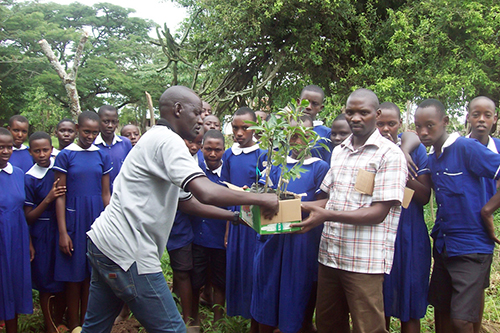
Outputs: Beneficiary schools were supported with: cassava, beans, beetroot, cabbage, egg plants and maize seeds. Also grafted mangoes, oranges and Ova-cado tree seedlings as well as Pawpaw seedlings were distributed to schools for enhanced food production. Schools were provided with hoes, watering cans, rakes and Pangs to facilitate farming activities. At least each of the participating schools are growing more than five food crops in an agroforestry setting as part of environment conservation and climate change mitigation practices.
Enhanced children nutrition
As production of food crops started at schools, also nutrition of school children has improved from uncertain lunch to at least eating two nourished meals a week. Dietary upgrading is linked to increased production of diversity of fruits and vegetables, a variety of grains and root tubers, all with various micronutrients that are beneficial to child development.
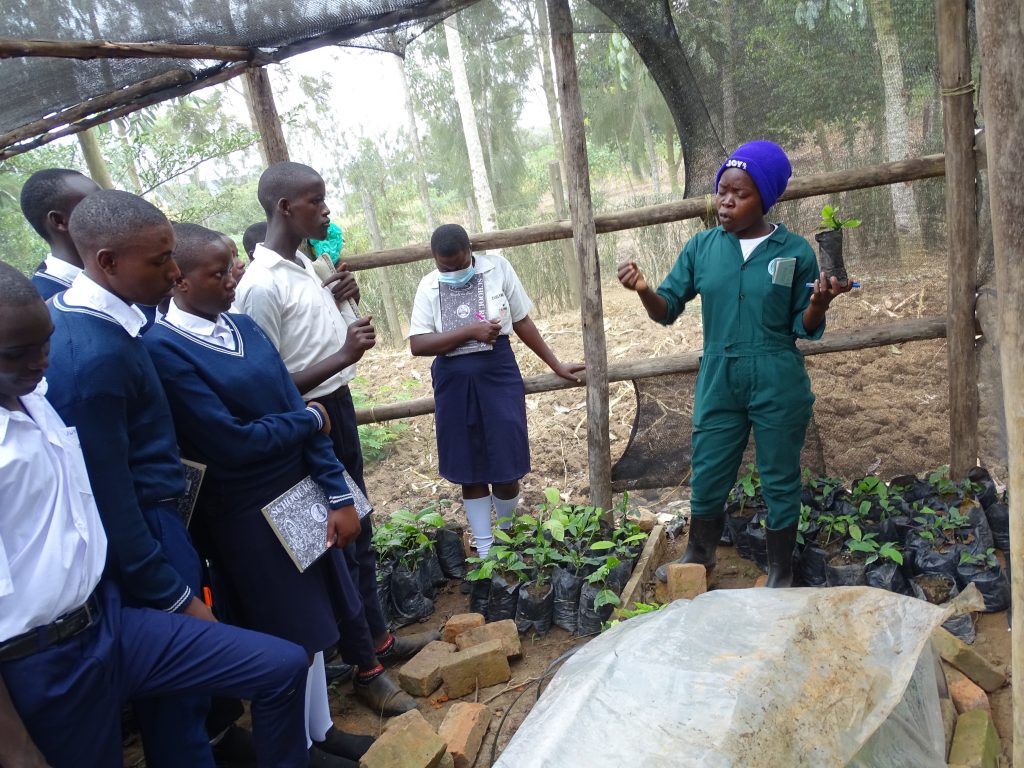
Students in a nursery bed learning grafting & transplanting seedlings
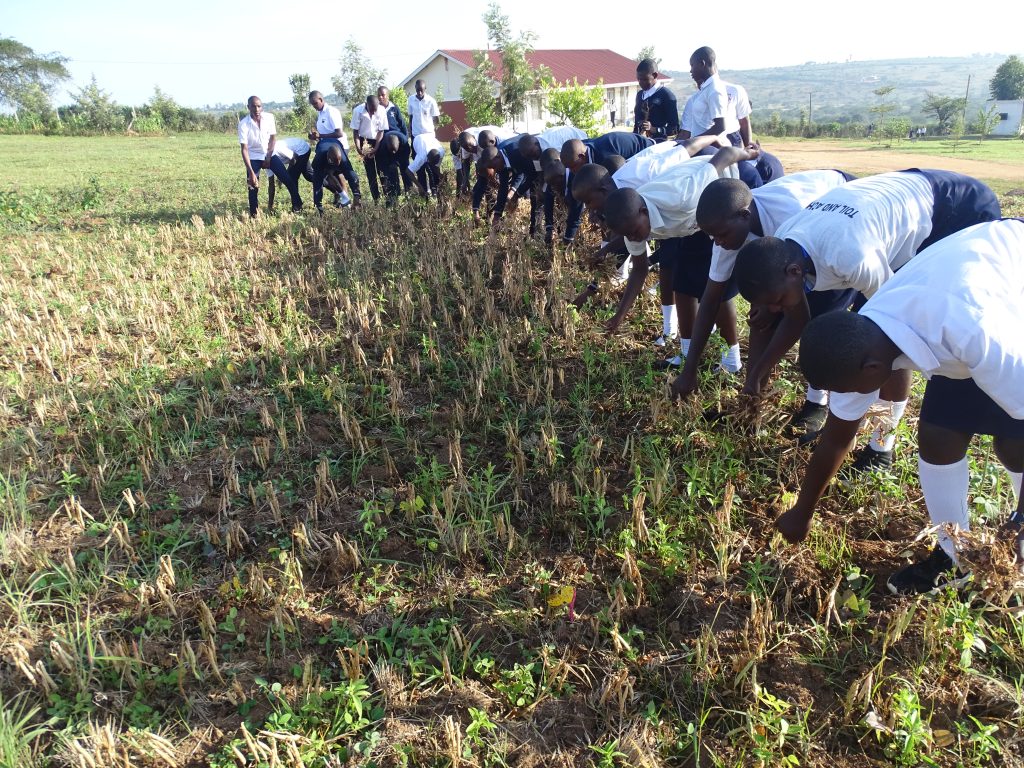
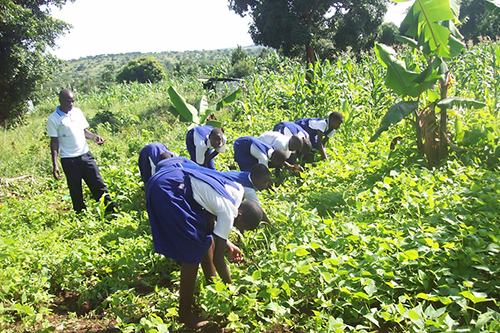
Harvesting beans
Harvesting vegetables for a lunch meal
Hands on training in small space utilization for crop production
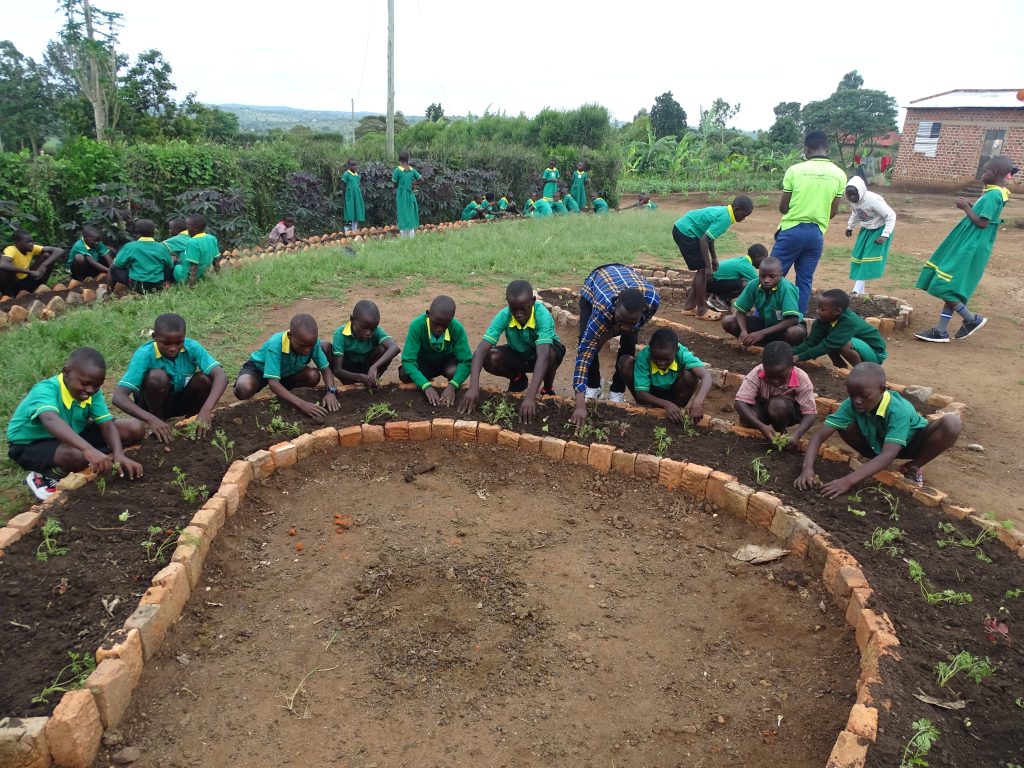
Learners plant vegetables in the school compound garden
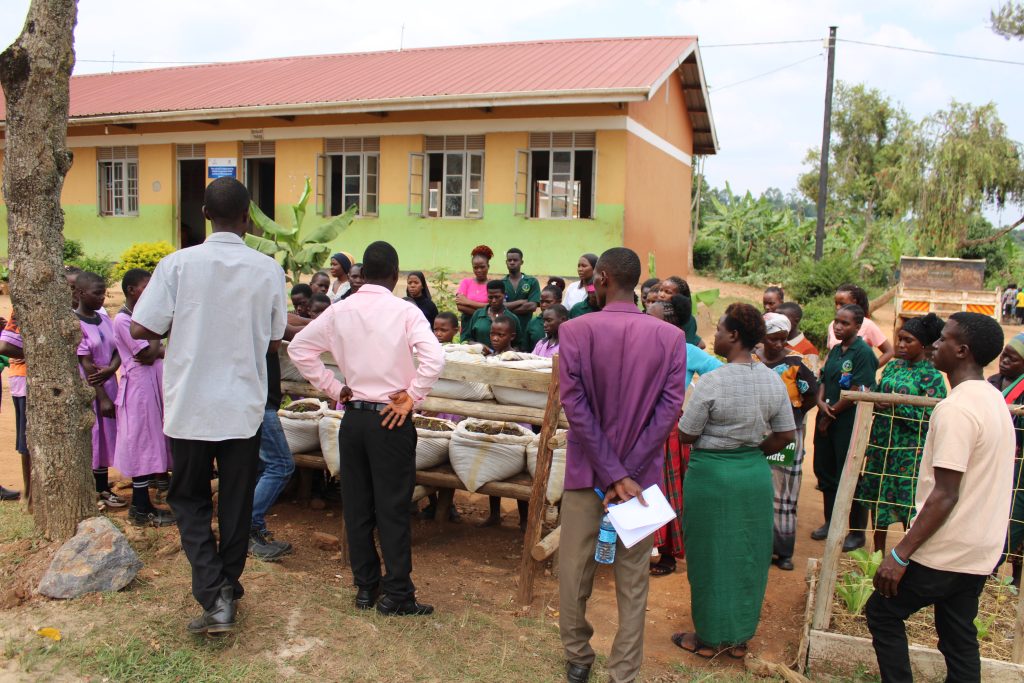
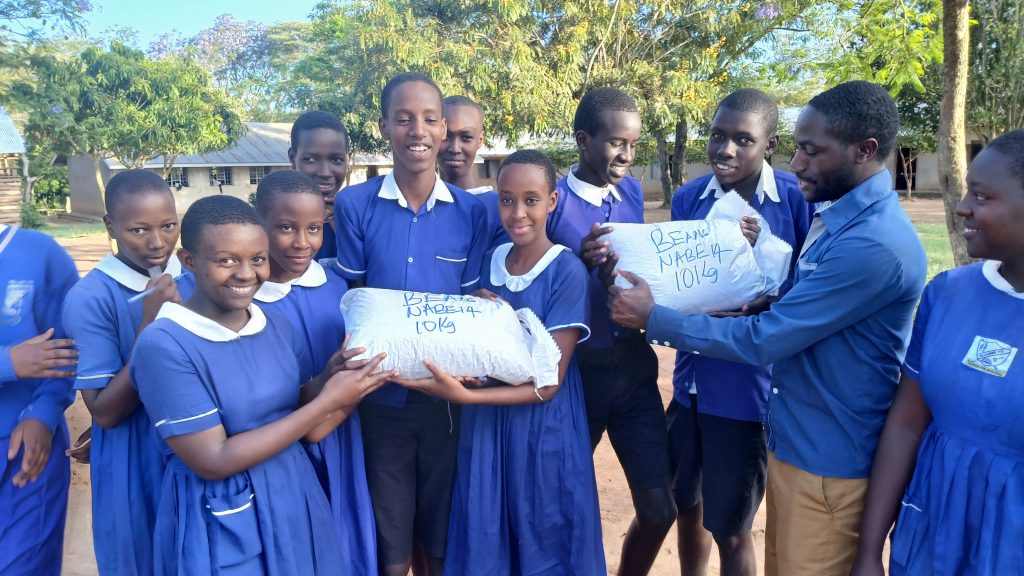
Learners receive planting materials
Ecological Farming
We work with rural communities and poor schools to establish and design food security gardens for vulnerable families among people with disabilities and orphaned school children to get a diversity of healthy food. Most of these families and schools have been affected by use of poor farming methods, prolonged dry spells due to climate change, HIV/AIDS and COVID- 19. When we design food security gardens vulnerable families get food and sell surplus for income, families and children get practical skills and learn to care for their environment.
This has created urgency for us to train participants’ hands on to start tree planting for climate change mitigation, crops and vegetable gardens for community groups and schools to improve nutrition, simple on farm value addition for crop/livestock products, liquid and bar soap making. Above all, pregnant/breast feeding mothers and their babies and children from hunger stricken families get a meal both at homes and school which motivates them to stay longer and continue their education.
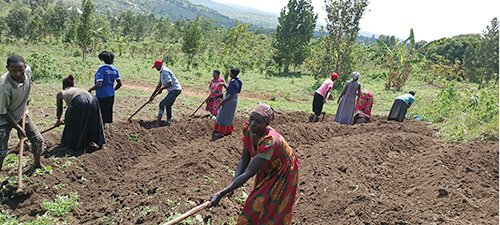
Designing a community garden
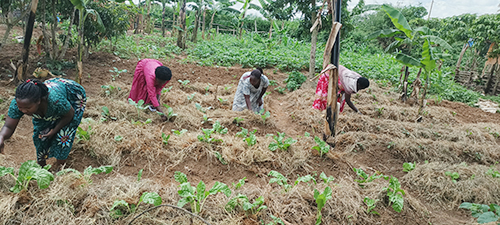
Wedding and mulching communty garden
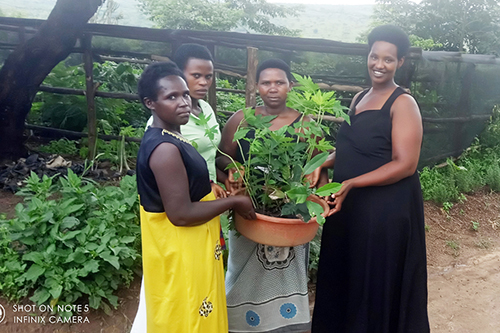
Group leaders recieve fruits & vegetable seedlings from the tree nursery